
Understand Fibroids
Reliable information and support for those affected by Fibroids
What is Fibroids
Fibroids (also known as uterine fibroids or leiomyomas) are benign (non-cancerous) growths that develop from the muscle layer of the uterus (womb).
Fibroids are very common, affecting up to 70–80% of women during their lifetime. Many women have fibroids without symptoms, while others may experience significant symptoms affecting quality of life.
Fibroids can vary in:
Size (from very small to large masses)
Number (single or multiple)
Location within the uterus
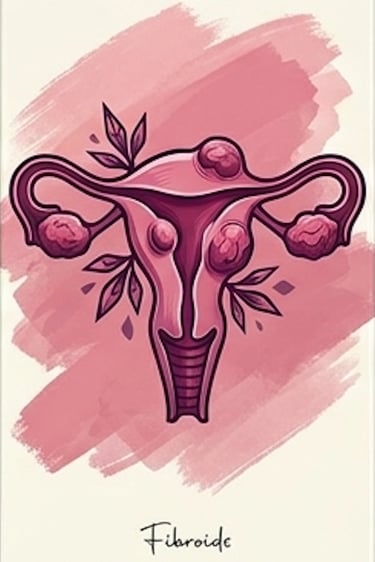
Types of Fibroids
Fibroids are classified according to where they grow within the uterus.
Intramural Fibroids
These develop within the muscle wall of the uterus and are the most common type.
Submucosal Fibroids
These grow into the uterine cavity and may cause heavy bleeding and fertility problems.
Subserosal Fibroids
These grow on the outer surface of the uterus and may cause pressure symptoms.
Pedunculated Fibroids
These grow on a stalk either inside or outside the uterus.
Understanding the type of fibroid helps guide treatment decisions.
Common Symptoms of Fibroids
Many women have fibroids without symptoms. When symptoms occur, they may include:
Heavy menstrual bleeding
Prolonged periods
Pelvic pain or pressure
Lower abdominal swelling
Frequent urination
Constipation
Pain during intercourse
Back pain
Difficulty conceiving
Recurrent miscarriage
Heavy menstrual bleeding may lead to iron deficiency anaemia, causing fatigue and breathlessness.
When Should You Seek Medical Advice?
You should consider seeing a specialist if you experience:
Heavy periods affecting daily life
Bleeding lasting longer than 7 days
Pelvic pressure or abdominal swelling
Symptoms of anaemia (fatigue, dizziness)
Difficulty conceiving
Rapid increase in abdominal size
Early assessment allows appropriate treatment planning.
Causes and Risk Factors
The exact cause of fibroids is not fully understood, but several factors may contribute.
Risk factors include:
Hormonal influence (oestrogen and progesterone)
Family history of fibroids
Increasing age (especially 30–50 years)
Early onset of menstruation
Obesity
Ethnic background (higher prevalence in some populations)
Fibroids often shrink naturally after menopause.
How are Fibroids Diagnosed?
Diagnosis usually begins with a detailed history and clinical examination.
Investigations may include:
Pelvic Ultrasound Scan
This is the first-line investigation and helps determine:
Size of fibroids
Number of fibroids
Location within the uterus
Ultrasound is widely available and highly effective for diagnosis.
MRI Scan
MRI provides more detailed information and is particularly useful when:
Fibroids are large or multiple
Surgical planning is required
Fertility preservation is important
Hysteroscopy
A hysteroscopy involves inserting a small camera through the cervix to examine the uterine cavity.
This is particularly useful for diagnosing:
Submucosal fibroids
Causes of abnormal uterine bleeding
Treatment Options for Fibroids
Treatment depends on:
Severity of symptoms
Size and location of fibroids
Age
Desire for future fertility
Overall health
Not all fibroids require treatment.
Conservative (Non-Surgical) Management
If fibroids are small and symptoms are mild, monitoring alone may be appropriate.
This may include:
Regular follow-up scans
Symptom monitoring
Medical Treatment
Medical therapy focuses on controlling symptoms rather than removing fibroids.
Options may include:
Hormonal contraception
Progesterone-based treatments
Hormonal intrauterine system (coil)
Tranexamic acid to reduce bleeding
Non-steroidal anti-inflammatory drugs (NSAIDs)
GnRH analogues (short-term use)
Medical treatment may reduce bleeding but does not permanently remove fibroids.
Surgical Treatment
Surgery may be recommended when symptoms are severe or fertility is affected.
Options include:
Myomectomy
This involves surgical removal of fibroids while preserving the uterus.
It may be performed using:
Hysteroscopic approach (through the cervix)
Laparoscopic (keyhole) surgery
Open abdominal surgery (in selected cases)
Myomectomy is often recommended for women wishing to preserve fertility.
Hysterectomy
A hysterectomy involves removal of the uterus and provides a permanent solution to fibroids.
This option is considered when:
Symptoms are severe
Fertility is no longer desired
Other treatments have failed
Minimally invasive hysterectomy techniques may be suitable in selected cases.
Uterine Artery Embolisation (UAE)
This is a minimally invasive procedure that reduces blood supply to fibroids, causing them to shrink.
This option may be considered in selected patients.
Fibroids and Fertility
Fibroids may affect fertility depending on:
Their size
Their location
Whether they distort the uterine cavity
Submucosal fibroids are more likely to affect fertility.
Treatment options may include:
Hysteroscopic removal
Laparoscopic myomectomy
Fertility planning support
Individualised assessment is essential.
Living with Fibroids
Many women live with fibroids successfully.
Lifestyle and supportive measures may include:
Monitoring symptoms
Managing anaemia
Maintaining a healthy weight
Regular follow-up with your clinician
When to Seek Urgent Medical Advice
Seek urgent medical attention if you experience:
Very heavy bleeding soaking pads hourly
Severe sudden pelvic pain
Dizziness or fainting
Signs of severe anaemia
Sudden increase in abdominal swelling
FAQs
Are fibroids cancerous?
Fibroids are benign (non-cancerous). Cancer arising from fibroids is extremely rare.
Can fibroids shrink naturally?
Why Choose Specialist Care?
Do all fibroids need treatment?
Can fibroids return after surgery?
Fibroids vary significantly between individuals, and treatment should be tailored to your symptoms and reproductive goals.
Specialist care provides:
Accurate diagnosis
Individualised treatment planning
Access to minimally invasive surgical options
Fertility-preserving treatments when required
Ongoing monitoring and support
Fibroids may recur after myomectomy, particularly in younger women.
Fibroids often shrink after menopause due to reduced hormone levels.
No. Many fibroids require only monitoring if symptoms are mild.
Can fibroids affect pregnancy?
Fibroids can sometimes affect pregnancy depending on their size and location.
This patient guide helped me understand my symptoms and feel less alone in my endometriosis journey.
Anna K


★★★★★
Contact
Reach us Monday to Friday, 9am to 5pm
Phone
+447365165161
Gynaescope LTD© 2026. All rights reserved.